Supreme Court Rejects Voting Map That Diluted Black Voters' Power
Adam Liptak The New York Times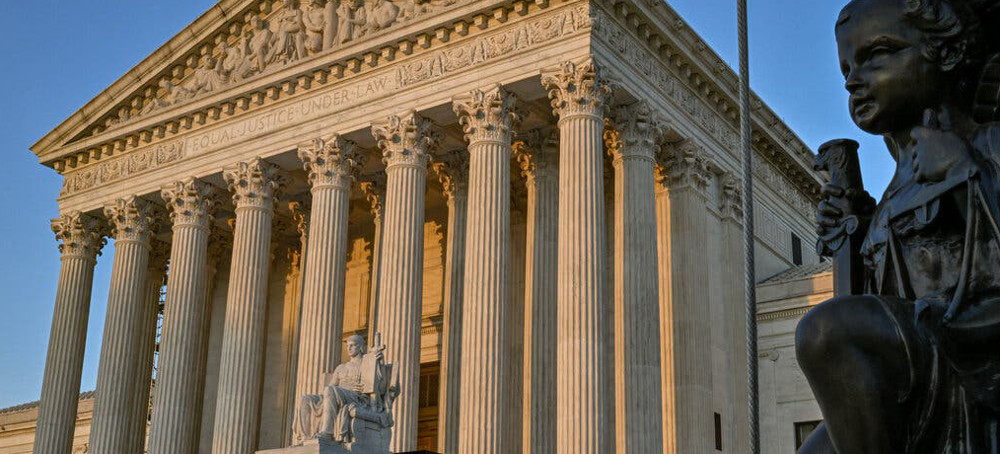 The Supreme Court has made several rulings recently that have eroded the force of a major legislative achievement of the civil rights movement. (photo: Kenny Holston/The New York Times)
Voting rights advocates had feared that the decision about redistricting in Alabama would undermine the Voting Rights Act, which instead appeared to emerge unscathed.
Chief Justice John G. Roberts Jr. wrote the majority opinion in the 5-to-4 ruling, which required the State Legislature to draw a second district in which Black voters have the opportunity to elect representatives of their choice. He was joined by Justice Brett M. Kavanaugh and the court’s three liberal members, Justices Sonia Sotomayor, Elena Kagan and Ketanji Brown Jackson.
Voting rights advocates had feared that the decision would further undermine the Voting Rights Act of 1965, a landmark legislative achievement of the civil rights movement whose reach the court’s conservative majority has eroded in recent years. Instead, the law appeared to emerge unscathed from its latest encounter with the court.